Hopeful Beginnings

Author: Howard G. Franklin

Today, my nTypewriter With Special Buttonsovel, Gideon’s Children, is being released, for which I am both extremely excited and equally grateful. My excitement is on high, because finally G.C. now has the opportunity to contribute to the growing discussion about the need to improve the workings of our Criminal Justice System, and thereby protect the individual constitutional rights that are the cornerstone of America’s democracy. And I feel so tremendously grateful, due to my gigantic good fortune in having such an oceanic body of family and friends who have enthusiastically supported my endeavor and continue to cheer me on. To those of you who have shared life with me for many years, heartfelt thanks are warmly flowing your way. And to new friends who I have not yet had the pleasure of meeting in person, individuals such as the renowned litigator and legal scholar, Michael Tigar, and the brilliant young columnist Renwei Chung for the highly regarded website Above The Law, who gifted G.C. with such favorable reviews, heartfelt thanks are also flowing to you.

The second hopeful beginning that I wish to share with you today also engenders both excitement and gratitude. Since I began my blog, its theme has been the vital importance of the judicial branch of our government, and the crucial need to improve the workings of our Criminal Justice System so as to protect individual constitutional rights and maintain the Rule of Law which founds American Society.

Continue Reading…

Yale Law Professors’ Triple Package: The Key To Success For Minorities In The Legal Profession?

“The rejected stone is now the cornerstone / Sort of like the master builder when I make my way home.”  — Guru, Gang Starr

Amy-Chua-David-Lat-300x300
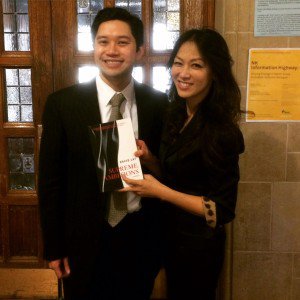
David Lat and Amy Chua at Yale Law this week.

Recently, I had the opportunity to review The Triple Package: How Three Unlikely Traits Explain the Rise and Fall of Cultural Groups in America, the bestselling book by the wife-and-husband team of Amy Chua and Jed Rubenfeld, both professors at Yale Law School. You may be familiar with Chua, who first gained fame as a “Tiger Mom” because of her book Battle Hymn of the Tiger Mother. The basic premise for The Triple Package is that certain groups have had disproportionate success in our country and the “Triple Package” is the reason for this success. Chua and Rubenfeld believe the three dominant predictive traits for achievement in America are:

  1. A superiority complex.
  2. Insecurity.
  3. Impulse control.

The book’s premise is, no doubt, controversial. This is partly because the book attempts to answer “a complicated socioeconomic and cultural question.” Regardless of how you feel about the book, if read in context it can promote much needed discussions regarding racial issues in our society. In addition, minorities in the law can use particular parts of this thesis to better understand how they can become successful in their own careers. If nothing else, The Triple Package can be a guide for what character pathologies minorities should guard against while pursuing their own versions of success.

Anytime you talk about achievement in socioeconomic and cultural terms, it is sure to be provocative. But this doesn’t mean that particular influences, traits, and systematic factors aren’t critical to one’s success.

Continue Reading…

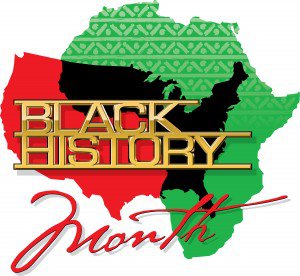
For Minority Law Students, Black History Month Is More Than Just A Tribute To The Past

“The movement is a rhythm to us/ Freedom is like religion to us/ Justice is juxtapositionin’ us/ Justice for all just ain’t specific enough” – Common

February is known as Black History Month, but this month represents so much more to us as minorities. It is a tribute to how far our society has come and a reminder of how much further we must go to address racial inequality. We recognize Blablack-history-month-300x276ck History Month because, as Eric Liu writes, “The experience of African-Americans is exceptional in its systematic, multigenerational, reverberating effects. And it’s exceptional in its centrality to the founding and building of our nation. No experience reveals more than the African-American experience both the hypocrisy and the possibility of our national creed.”

This month also represents the 73rd anniversary of Executive Order 9066, Franklin D. Roosevelt’s presidential order to forcibly relocate and incarcerate 120,000 American citizens and immigrants of Japanese ancestry. February 19th, the day President Roosevelt signed Executive Order 9066, is now annually recognized as the Day of Remembrance in the Asian community.

This year, the Day of Remembrance and the Lunar New Year (a.k.a. Chinese New Year) fall on the same day. This is yet another reminder that, as Leslie Chang writes, “The past has been there all along, reminding us: This time–maybe, hopefully, against all odds, we will get it right.” Yesterday, many of us paid tribute to those who were afforded no due process and were victims of mass incarceration based on race. But these types of discrimination are not mere ghosts of the past, these issues are here and present in our society today.

Continue Reading…